The Glossary: Patrick Gibin | Founder, Mother Tongue Records
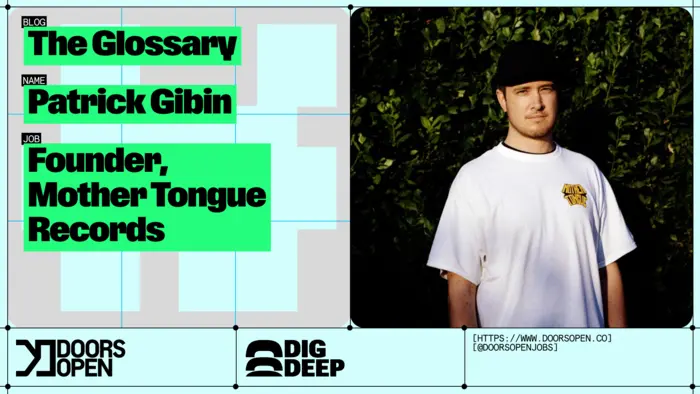
In the run up to Dig Deep - RA's pop-up charity record fair raising money for War Child - this special Glossary series explores the many facets of record label management and distribution through the eyes of label workers and founders from across the scene.
First up is Mother Tongue Records founder Patrick Gibin.
What is your name and job title?
Patrick Gibin, founder of Mother Tongue Records.
What is your role at your record label, and what does your day-to-day look like running it?
My main role is A&R, but because Mother Tongue is also a distribution company and a vinyl pressing plant, my work naturally extends across all sides of the business. That means working closely with artists, shaping releases, but also being involved in production, logistics and long-term planning.
A&R and relationships with artists are definitely the parts I enjoy the most. It’s the side of the job that feels less like “business” and more like music, culture and human connection, which is why I started doing this in the first place.
How did you start your record label, and what was your motivation for doing so?
My first label, Blend It!, started as a platform connected to my life as a DJ. The early releases were vinyl-only edits made for club use, inspired by a long-standing tradition in DJ culture. Over time, the label evolved towards releasing my original productions. It was a very direct way to get music onto vinyl that I wanted to play, since DJing and collecting records have always been central to my life.
Mother Tongue was born with a broader purpose. It came from the need to create a hub where music and artists truly came first, run by people who understand the realities and risks of releasing music independently. The label is one part of that vision, but so is distribution, which we see as an extension of the label in terms of musical identity, and of course the vinyl pressing plant. Having direct control over the physical production side is a huge added value, and something that very few independent labels have access to.
What are the essential skills needed to run a record label successfully?
Running a record label requires a mix of business and financial management, A&R, distribution knowledge, marketing, relationship building and legal understanding. On top of that, adaptability and clear communication are crucial. Things constantly change, and being able to listen, adjust and communicate clearly with artists and partners often makes the difference between problems escalating or being solved early.
What were the first practical steps you took when starting your label, and what would you do differently now?
The first practical steps were not necessarily simple, especially when it came to defining a musical identity. That is probably the hardest part. It starts with an idea that can and should evolve over time, but there needs to be a strong core from the very beginning. Alongside that, it was about building a small but coherent catalogue and understanding the full process from production to distribution. A lot of learning happened by doing, and by making mistakes along the way.
If I were to start again, I would probably spend more time upfront structuring administrative and legal aspects, and making sure contracts and workflows were crystal clear from day one. It saves a lot of energy in the long run and allows you to focus more on the creative side.
What's the best piece of advice you've been given about running a record label?
To always think long term, and to never rush decisions just to follow trends or short-term hype. Building something meaningful takes time, consistency and patience, especially in independent music.
If someone wants to start their own record label today, what's the most realistic first step they should take?
Having a long-term vision and being fully convinced of what the label stands for. It is essential to know what the label wants to say, musically and culturally.
On a practical level, I would suggest having at least three releases already planned and ready before approaching a distributor or a pressing plant. This is assuming the label works with vinyl, which I personally believe is still essential if you want to build something that lasts over time. Today we are used to immediate results, but labels need time to grow. Thinking long term and allowing things to develop naturally is key.
What are the biggest challenges or pitfalls someone should look out for when starting a record label?
Administration, contracts and rights management are often the most challenging aspects. If there is trust, transparency and clear communication, things can run smoothly, but many problems come from mismanagement or misunderstandings.
In the independent music world, I like to believe it is less about getting rich and more about pushing together towards a shared purpose, keeping alive a musical ecosystem that exists outside the mainstream. Financial sustainability is important, of course, and so are relationships with distributors and partners. Partners need to truly understand what you do and support it as if it were their own project.
What have you found most surprising about running a record label - good or bad?
You never know when people will actually discover a release. Something you released years ago and have been playing for a long time can suddenly find a new audience much later. I find this surprising in a very positive way.
It reflects the beauty of digging and DJ culture, where people take time to explore, go back through catalogues and really study a label’s discography rather than just consuming what is new.
What keeps you motivated to run your label, even when it's challenging?
The community and network that supports what we do. I always think that if what we create reaches even a small group of like-minded people, then it is worth it. Staying humble is essential, and I am genuinely grateful to be able to do something I love and share it with others.
Are you in Berlin on 20th and 21st February 2026? Come and join us at Dig Deep charity record fair and help us raise money for War Child.
Explore jobs in electronic music on Doors Open here.