The Glossary: Benjamin Belaga | Founder & CEO, YOYAKU
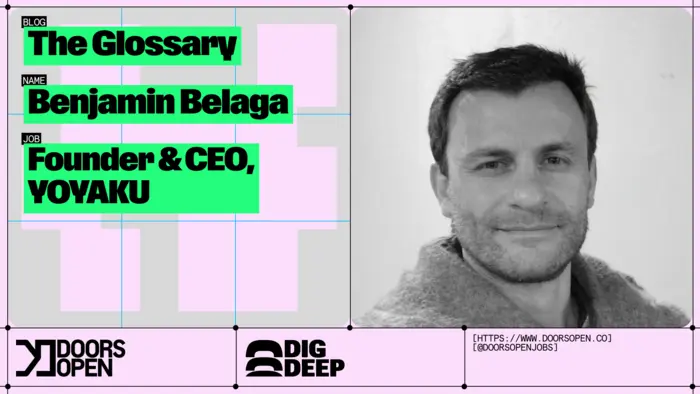
In celebration of Dig Deep - RA's pop-up charity record fair raising money for War Child - this special Glossary series explores the many facets of record label management and distribution through the eyes of label workers and founders from across the scene.
Next up its Benjamin Belaga - Founder & CEO of YOYAKU.
What is your role at YOYAKU, and what does your day-to-day look like running it?
YOYAKU is a few things at once — a record store in Paris, a physical distribution service for independent labels, and a record label. My role means I touch all of it.
On any given day I might go from selecting new records for our A&R pipeline, to coordinating distribution logistics for an upcoming release, to dealing with recruitment or planning a tour. There's no typical day, which is both the beauty and the challenge. Some days the priority is a new distribution project coming in, other days it's a management decision or something operational that needs fixing right now.
The A&R side — curating what we release and distribute — is the part I genuinely love most. But running an independent structure means you can't just do the fun stuff. You have to hold the whole thing together.
What are the essential skills needed to work in your department successfully?
First and foremost: genuine passion for the music and a deep curiosity about the niche you operate in. That's the common thread across every role here. But passion alone doesn't keep the lights on. You need to pair it with real technical skills — whether that's curation, IT, understanding physical distribution networks, or managing a webshop.
At YOYAKU, the people who thrive are the ones who combine a sharp ear and cultural knowledge with the ability to actually execute on the business side. Knowing what a great record sounds like is one thing. Getting it pressed, shipped, listed, promoted and into someone's hands is another.
What's the best piece of advice you've been given about working within record distribution / your specific role?
Nobody gave me this advice explicitly, I learned it the hard way: don't build for hype, build for consistency.
In independent distribution, the labels and artists who last aren't necessarily the ones with the biggest first pressing. They're the ones who show up every time with quality, who respect timelines, and who treat this as a long game. The same applies to running the business itself — sustainable beats spectacular every time.
What have you found most surprising about your role — good or bad?
The contradictions. A simple example: as someone in music, I had a real concern about generative AI threatening the essence of artistic creation — and I still do. But at the same time, as someone running a business with a lot of repetitive, technical operations, I've embraced automation and AI tools to handle logistics, data processing, inventory.
You end up holding two opposing ideas at the same time: protecting the creative soul of what you do while using every tool available to make the structure around it more efficient. That tension is constant, and honestly, learning to sit with it rather than resolve it has been one of the most important things.
What keeps you motivated, even when it's challenging?
Finding the balance between what I love doing and what I believe in defending. The music we work with, the artists and labels we support — that's not abstract to me, it's personal.
When it gets hard, and it does regularly, what pulls me through is remembering that this whole thing exists because we decided it should. Nobody asked us to build a distribution network for independent electronic music from a shop in Paris. We just did it because we believed the music deserved it. That conviction doesn't fade, even on the worst days.
This Glossary feature is part of our ongoing Dig Deep series, highlighting the record labels and industry professionals who help us bring RA's charity record fair to life through donations and knowledge sharing. Read about our most recent event in Berlin here.
Explore jobs in electronic music on Doors Open here.