The Glossary: A.Fruit | Music Producer & Sound Designer
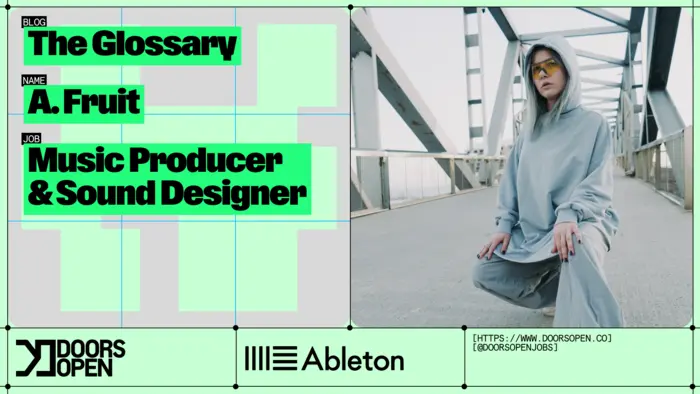
Our first run of 2026 Glossary interviews features the insights of workshop leaders and speakers from our recently announced programme - Doors Open UNLOCKED: Creating sound worlds with Ableton. You can read more about the programme and apply for a place here.
Meet A.Fruit.
Anna Fruit is the alias of Anna Derlemenko, an artist, sound designer, and DJ who was born and raised in Moscow in a Ukrainian family. Standing in solidarity with Ukraine after the Russian invasion, her family relocated from Russia to Spain.
Anna has been releasing music and DJing for over a decade, finding her sound somewhere between her longtime loves of footwork, jungle, IDM, UK dubstep, half-step and halftime drum and bass, and anything with a broken beat and/or unusual sound. Most importantly, she became obsessed with basslines that you can feel resonating through your entire body when played on a quality sound system. A.Fruit's DJ sets are a mix of sounds from the edges of various genres and her own music, known worldwide for its original, mainly 160-bpm-focused sound.
As a sound designer, Anna has created music and sound design for video games and commercial projects, including the original soundtrack for Gremlins, Inc., as well as Spire of Sorcery / Sister of a Dragon, which is currently in development. She has also worked on various adverts in Russia, examples of which can be seen in her commercial work showreel.
How did you get into your line of work?
I was drawn to music as a way to express things I couldn’t put into words, and over time that curiosity turned into an obsession with sound design and audio engineering. I studied an intensive one-year audio engineering course in Russia in 2011, but most of my practical skills came from doing - making tracks, finishing them, playing them out, releasing them, and gradually understanding how the industry works through experience rather than formal education. My first degree was in sociology, and in my final year at university, I took the course and started working as a sound technician in television, then as a sound designer in game development studios, before eventually switching fully to freelance work. Finding jobs has mostly happened online - having something solid to show and reaching people who need exactly what you do is absolutely crucial. A portfolio doesn’t necessarily have to include commercial work; a passion project can easily be the reason why you’re hired.
What skills are important in your job?
On the technical side, you need a solid understanding of music production tools, sound design techniques, and the physics of sound. Musical literacy (a well-trained ear) and a developed imagination are especially important for certain types of work, such as composing music and creating sound effects for video games.
Non-technical skills are just as important. Consistency, self-discipline, and patience are essential, especially when working independently. The ability to give and receive feedback, communicate clearly, and collaborate respectfully makes a huge difference. Curiosity and a willingness to keep learning are also vital, as tools, sounds, and scenes are constantly evolving.
If someone is excited to do what you do, what advice would you give them?
Focus on making a lot of music, not just perfect music. Finish projects, even if they’re not exactly how you imagined them - every finished track teaches you something.
Communicate with your peers, don’t be afraid to share your work, and ask for feedback. Listen to other people’s music too; developing your taste is just as important as developing your technical skills. Explore new music, listen deeply, analyse what moves you, and don’t rush to copy trends.
Experiment and develop your own voice - it takes time, but that’s what makes your work meaningful and sustainable.
What have you found surprising about your role?
How much of the job happens outside the studio. People often imagine that being a musician or sound designer is only about making music or sound effects, but a large part of it is organisation, communication, and long-term thinking.
Another surprise is how emotional the process can be - the highs of connection and release, and the lows of doubt and creative blocks. Learning to work through those cycles is a big part of the job.
What are your top three tips for someone who wants to work in the music industry in general?
1. Be reliable and kind. Talent matters, but people remember how you work with them.
2. Focus on long-term relationships, not quick wins. Scenes and careers are built over years, not weeks.
3. Define success for yourself. The industry offers many paths and knowing what you actually want helps you avoid burnout and comparison. Focus on one clear goal at a time, and once it’s reached, move on to the next.
Apply for a place on our workshop series Doors Open UNLOCKED: Creating sound worlds with Ableton here.
Browse jobs in music on Doors Open here.